
Tips for setting up Project Controls Function
Are you in the process of setting up a project controls function for your project or organisation?

It is a challenging task.

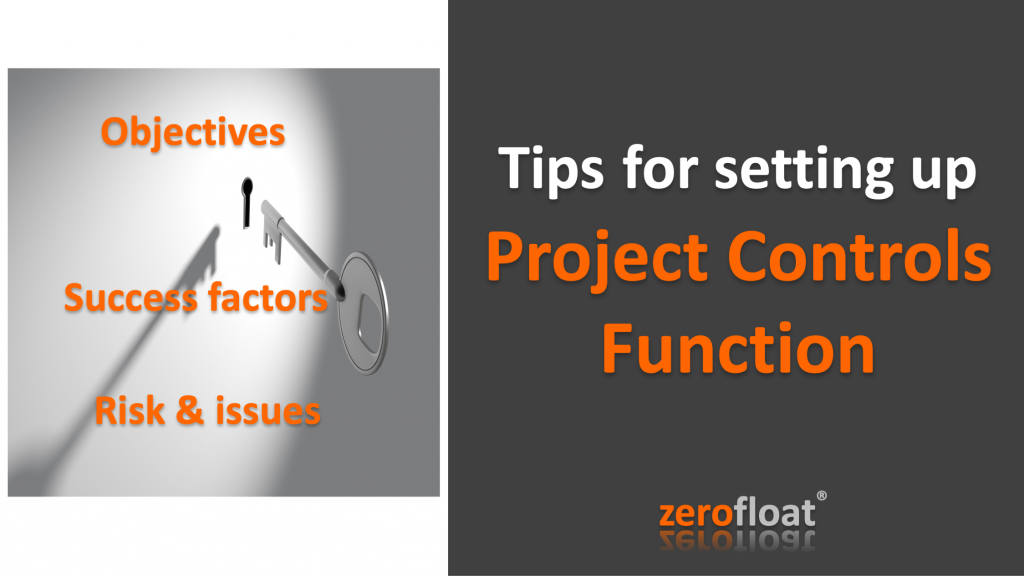
Let’s talk about the tips for objectives, success factors, risks, and issues that can help you with the task.

Setting up a project controls function is a critical step in ensuring the successful execution of projects within an organization. Here are some tips for defining objectives, success factors, identifying risks, and addressing issues:

Objectives

  1. Project objective realised
  2. Projects delivered on time and budget
  3. All variances managed, explained, and approved
  4. Smooth predictable delivery throughout
  5. Final project outcomes predicted well in advance

Success factors

  1. Project Controls process implemented & adhered to
  2. Suitable project data structures implemented
  3. Process tailored to meet specific project requirements
  4. Staff adequately trained & supported
  5. Appropriate systems properly configured & supported
  6. Project mindset to control: Scope, Cost, Time
  7. Change management focus

Risk and issues

  1. Controls function inadequately resourced
  2. Lack of team buy-in to control the process
  3. Scope Creep/Change management ignored
  4. Warning and lead indicators ignored
  5. Overly optimistic/unrealistic schedule and progress measurement
  6. Discrepancies in data from various sources can lead to confusion and misinterpretation
  7. Delays in collecting, analysing, and reporting data can impact decision-making and responsiveness

Remember that successful implementation of a project controls function requires a combination of process design, technology, stakeholder engagement, and ongoing monitoring.

Regularly review your objectives, success factors, risks, and issues to ensure that your project controls function remains effective and aligned with your project or organisation’s goals.

What tips would you add to the list above?

Need help? Explore how zerofloat can help you control your project.
Transforming project controls

What do we do in project controls?

Many professionals still struggle to understand project controls real value add to project success.

It is simple,

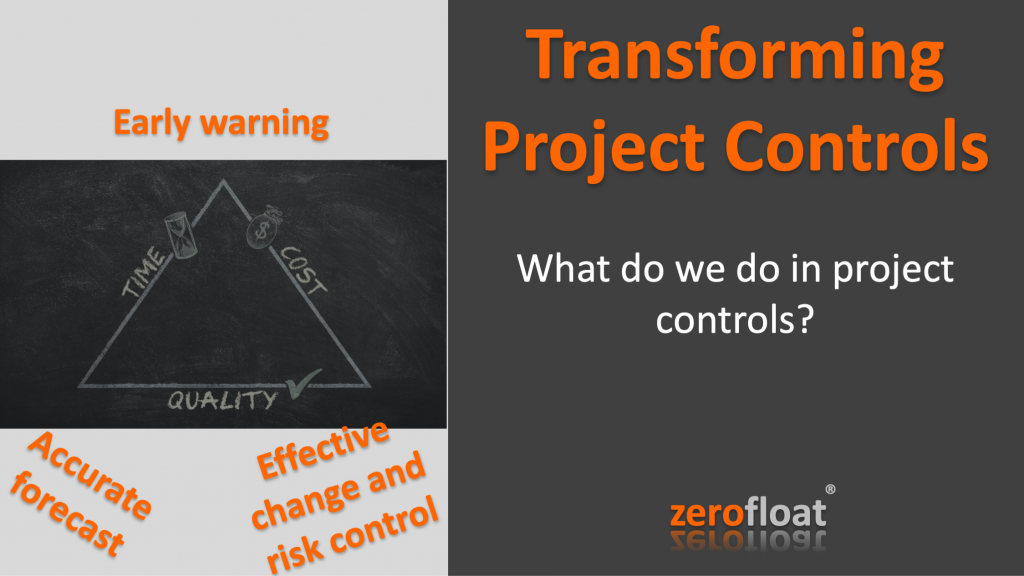
Project controls provide 3 things:

1.      Early warning

2.      Accurate forecast and

3.      Effective change and risk control

Project controls, it is all about providing the right information, at the right level to assist project leaders to make the right decisions.

Project controllers may not have a crystal ball that can predict the project’s future but have tools and expertise that can help to make the right decision, at right time.

The world is changing fast.

4D,5D, AI, RPA, AR, VR, BigData, RFID, Drones …these are not just fancy hi-tech words anymore, but it is becoming a reality.

But remember decision-making is still done by humans in the project world.

Transforming project controls is all about professionalising this rapidly growing profession, bringing the community together, sharing lessons learnt and contributing towards its continuous improvement.

We know that billions of dollars are wasted every year due to poor project performance.

Let’s add value by effective use of Project Controls.

Let’s contribute to society by delivering projects successfully.

Need help? Explore how zerofloat can help you control your project.
Triple constraint

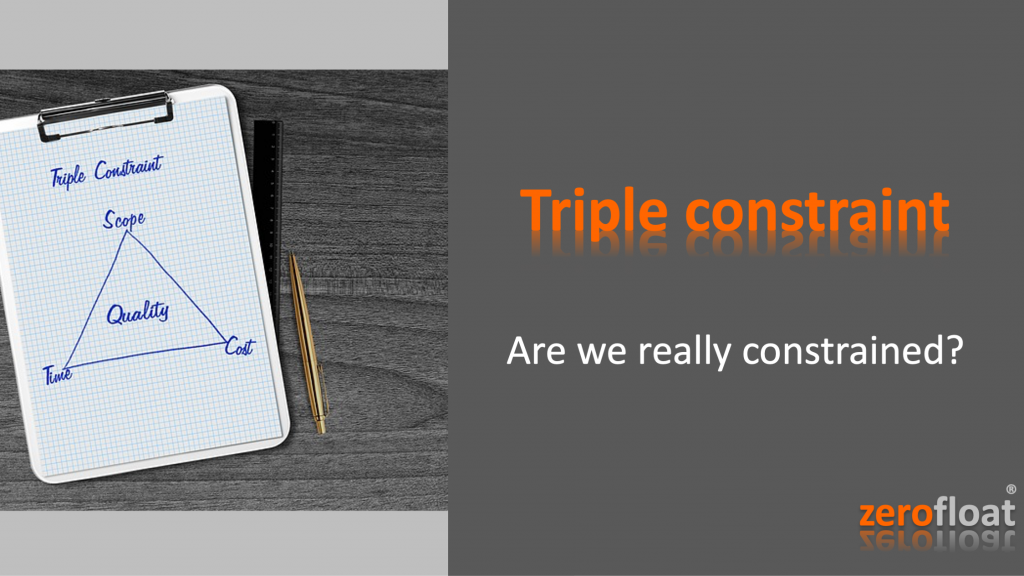
The Classical Triple Constraint model includes Cost, Time and Scope. The enhanced model includes an additional three constraints Quality, Benefits and Risk. Safety is a non-negotiable element.

Is that the Triple Constraint (six in the modern world) really useful for measuring project success or evaluating competing demands?

If you need to compromise on one, which one will be your pick? Not an easy answer.

That reality is also expressed as the pick two principle, which maintains that for any given set of three desired qualities or expectations — such as “good, fast and cheap” — it is likely that only two can coexist: A given product/project might be delivered quickly and inexpensively, for example, but the quality will suffer.

More often, a project manager needs to weigh one constraint against another to reach the best result and when the project is balanced well will lead to success.

What is your experience in managing a successful project?

Need help? Explore how zerofloat can help you control your project.