The Influence Curve
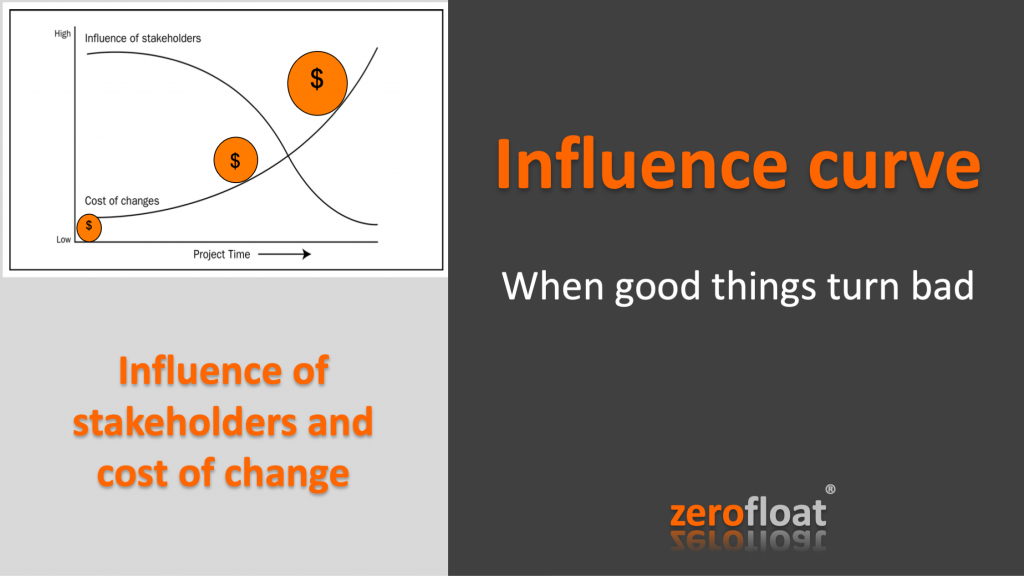
Have you heard about The Influence Curve? The influence of stakeholders and the cost of change have a direct relationship and it all depends on time.
Projects are vehicles of change…The key is to identify change early.
Project research, as far back as Baker and Paulson in the 1970s, shows that definition and relationship management activities in the earliest stages of the project exert a significant influence over a project’s outcome. It is early in the project that the ability to influence the outcome is the greatest and costs are the lowest, as time passes the influence of stakeholders will be low and the cost of change can become very high when good things turn bad.
As a rough indicator, Paulson suggested a 25% remaining level of influence by the time construction commences on a grass-root petroleum refinery. As such, the initial designers and decision-makers have a tremendous impact on how the project will end up.
Allocating adequate time and resources early in the project to clarify the objectives, scope, and requirements, as well as to build stakeholder relationships is a prudent project practice.
I am a strong believer that the Cost Influence Curve can be stretched significantly for the full project lifecycle. By having expert personnel, one influential and powerful stakeholder at a critical time, following sound project management practices and using efficient tools you can significantly reduce your risk of ending up with a disaster project.
Share your project story.
Need help? Explore how zerofloat can help you control your project.