
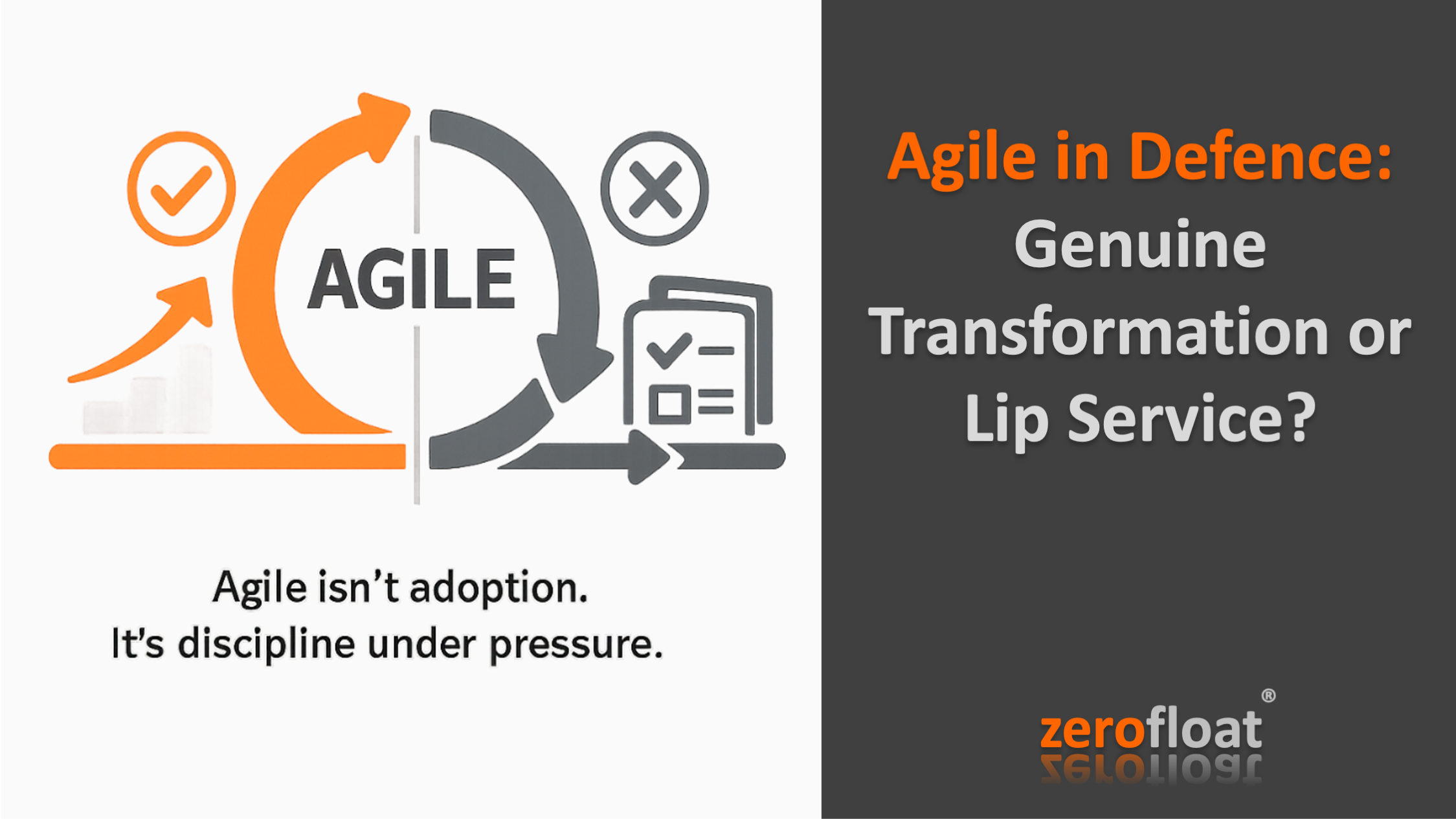
Let’s explore a question many of us are quietly asking.
We are seeing both.
In some Defence programs, Agile is genuinely shifting how work gets done, faster decisions, earlier risk visibility, and a tighter connection to mission outcomes.
In others, it’s simply a change in language.
> Same governance layers.
> Same slow approvals.
> Same hesitation to surface bad news.
From my experience, Agile in Defence becomes real only when four things change:
- Leadership behaviour – moving from control to intent and trust
- Decision-making speed – reducing latency, not just adding ceremonies
- Transparency – rewarding early signals, not punishing them
- Governance rhythms – becoming adaptive, evidence-based, and closer to delivery
Agile is not a set of stand-ups and sprints.
It is a decision-making model.
And in high-assurance environments like Defence, the goal is not less governance, it is better, more responsive governance.
If teams are “Agile” but funding, approvals, and reporting remain rigid, transformation will stall.
If bad news travels slowly, Agile is already failing.